
It is only 'zero-cost' money from FPIs that is keeping the market afloat

Stalin owes his victory this time, like in 2019, to the hate-campaign of the local Hindutva forces, which kept haranguing him, and even his dead father, notes N Sathiya Moorthy.

Operational income not covering even their interest expenses, finds study; analysts say if economy turns around, new equity issuances an option

About 13 million first time car/two-wheeler buyers are entering the market every year. If employment creation is such a big issue, where are these people coming from, asks Mahesh Nandurkar.

India's upbeat outlook contrasts with neighbouring China, where growth slipped to 6.7 in the first quarter

IIP for November 2015 and CPI for December 2015 will be announced today.

'The government's principal aim should be to reduce the volume of cash transactions.' 'That would bring more of the Indian economy within the purview of taxation.' 'The current downturn in economic activity due to a lack of adequate cash is likely to be limited to a year,'

Optimism about a stable govt at the Centre, a demand revival and falling oil prices buoyed the markets.

Food and fuel are two perennial areas of concern.

Benchmark indices failed to sustain gains and retreated from day's high dragged primarily by the losses in metals, information technology and bank shares as investors started to book profits in late noon deals. Earlier, markets had scaled fresh all-time highs on the surprise post-budget rate cut by Reserve Bank of India (RBI). The 30-share Sensex ended down 213 points at 29,380 and the 50-share Nifty closed down 74 points at 8,922. Intra-day, Sensex reached the all-time high mark of 30,024.74 while Nifty touched the life-time high level of 9,119.20. In the broader market, both the BSE Midcap index and Smallcap indices, down 1% and 1.2% each underperformed the front-liners. Market breadth in BSE ended negative with 1,882 declines against 1,010 advances. A day after signing an agreement with Finance Ministry on inflation targeting, RBI surprised the markets with an early post-budget repo rate cut of 25 bps (basis points) to 7.5% from 7.75% which was again outside of central bank's scheduled policy review meetings as the earlier rate cut effected on January 15. "RBI's latest rate cut of 25 basis points, while a surprise in its timing is in-line with our expectations of a sharp rate-cutting cycle over the coming quarters. With inflation sustainably lower by 500bps, the RBI has in recent months acknowledged the scope for rate cuts and was only waiting for additional comfort that the government's fiscal policy would not play spoil-sport," said Dinesh Thakkar, chairman and managing director at Angel Broking in a note. Analysts at Karvy believe that further monetary policy action will depend on number of factors including easing of supply constraints, improved availability of power, land, minerals and infrastructure, fiscal consolidation, the pass through of rate cuts by banks and the expected monsoon. Citing weakness in some sectors of the economy and the overall global trend towards monetary easing as rationale for the rate cut the central bank also exuded confidence in the road map for fiscal consolidation as laid out in the Union Budget, 2015. Commenting on how the markets reacted to RBI's surprise move, K Subramanyam assistant vice-president (institutional research), Asit C. Mehta Securities said, "The unexpected cut did take the market by surprise .However, credit off-take is not dependant only on interest rates. A gradual revival in the economy would be of more help which would trigger credit off-take. Hopefully this will follow and RBI's action would prove helpful. From market point of view this is bullish as equity becomes more attractive vis-a-vis falling interest rates." On the macro-economic front, the HSBC services PMI rose to an eight-month high of 53.9 in February up from 52.4 in January indicating strong expansion in output across the sector. Respondents cited robust growth of new business as the principle factor for the increase in activity. Meanwhile, foreign portfolio investors (FPIs) bought shares worth a net Rs 773 crore on Tuesday, as per provisional data. Buzzing Stocks 9 out of the 12 sectoral indices of BSE ended in red. BSE Metal index, down 2.4% was the top loser followed by BSE Oil & Gas and Power indices, down 1.3% each. BSE Healthcare index, up 1.2% and BSE FMCG index, up 0.9% were the top losers. Bank stocks came under during late noon trades as traders booked profits at higher levels. However, RBI rate cut may encourage large lenders to cut their lending rates boosting demand for home and auto loans and provide funds for various stalled and new projects. Many stalled projects across the country are waiting for cash to restart work. The stock of stalled projects at the end of December 2014 stood at Rs 8.8 lakh crore or 7% of GDP. ICICI Bank ended down 0.1%, Axis Bank and SBI declined over 3% and HDFC Bank shed 1.5%. Sun Pharma gained over 6% on approval granted to Sun Pharma Advanced Research Company (SPARC) by US FDA for an antiepileptic drug. The product will be manufactured by Sun Pharmaceutical Industries at its Halol (Gujarat) facility in India. SPARC was formed in 2007 when Sun Pharma separated out its active projects in drug discovery and innovation into a new company. Dr Reddys Lab and Cipla have gained over 1% each. ITC gained over 1% after consecutive sessions of losses on the proposed larger-than-expected hike in excise duty on cigarettes in the Union Budget. The biggest ever auction of spectrum by the Department of Telecommunications (DoT) started on Wednesday in the morning where government expects to garner Rs 80,000-1lakh crore from the sale of spectrum. Idea Cellular gained over 2%, Reliance Communication gained around 1% and Bharti Airtel closed 0.5% higher. Metal stocks were under pressure in today's session. Hindalco declined over 3%, Sesa Sterliteended down over 4% and Tata Steel closed down 2%. Profit-taking in IT stocks led to Wipro losing around 1.8%, Infosys declining 0.7% and TCS losing 1.5%.
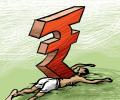
The bigger worry is that its effects could linger well into the next financial year.

Obscenity, cheating and sexual exploitation are India's leading cyber crimes, reports Chaitanya Mallapur.

'While GST and demonetisation are likely to cause disruption for longer than the market currently expects, they can have meaningful positive impact over the medium-term.'

Select metal stocks rebounded while power stocks extended losses after SC verdict on coal block allocations.
.jpg)
Analysts worry that without more fundamental reforms, India will struggle to contain its record high current account deficit and hence support the rupee.

Australia's federal and Queensland governments are eager to see the mine built following the loss of more than 4,000 coal jobs over the past two years, but analysts and project finance experts believe Adani may have underestimated the challenge of raising funds for the project.
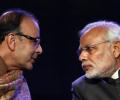
PM's announcement were focused on those most affected by the note ban.

Revivals nearly double q-o-q to 36 in September, highest in 3 years

Oil prices have already fallen over 70 per cent since the downturn began in mid-2014.

Indian companies struggle to escape debt burden as profit slows.

While retail sales at dealerships have suffered the full impact of demonetisation, the growth in wholesale volumes comes as dealers had relatively lower inventory after Diwali in October.

Over the past 25 years the MF industry has come a long way. Geographic reach has increased, many more customers have been added, more channels have been opened up and the product basket is full.

Banks get bonds boost to raise funds for core sector; up to Rs 50 lakh of home loans in metros and Rs 40 lakh in other cities not to have CRR, SLR requirements

The cutback on export credit refinance facility is another step towards a shift away from sector-specific liquidity allocations.

Every 30 seconds its website is connected to an SME for a loan, every five minutes it evaluates a loan, and every 20 minutes it disburses a loan.

The rally in most of these stocks is partly attributed to impressive financial performance.

SBI's gross NPA figures have shown a decline for three consecutive quarters.

The RBI cut rates for third time in 2015 due to favourable economic conditions.

A series of modest support measures from the government over the year helped stave off worries of a more dramatic slowdown

A two-year extension at the helm of the RBI still looks a real possibility

Since its peak, the S&P BSE Sensex has dropped nearly 3,000 points.

A Nielsen report found that biscuits, salty snacks, toilet soap, shampoo, washing powder and skin creams were reporting a sharp decline in sales due to demonetisation, reports Viveat Susan Pinto from Mumbai.
The RBI's warnings signal its concern that unhedged firms could be a vulnerable link should global markets buckle.
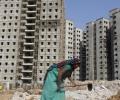
PMAY-Gramin, which was launched in November 2016, aims to construct 10 million homes by March 31, 2019, with private sector and state government participation

'If such inflows materialise, what will be the effect on the rupee's value -- and therefore on exports growth, the only sustainable path to recovery?', asks Mihir S Sharma.

The fact that the US recovery needs an elaborate defence suggests that things are far from certain.

Global private equity major KKR has ranked India second among the emerging markets on external risks, citing the high fiscal and current account deficits.
The marginal rise in June headline inflation to 4.9 per cent may be a precursor to a pronounced increase in the coming months and RBI is unlikely to cut rates at the forthcoming policy meet on July 30, say analysts.

The government had no option but to cut spending to meet its borrowing targets.
 © 2026 Rediff.com - Advertise with us - Disclaimer - Privacy Policy - Sitemap - Feedback - About us - Terms of use - Grievances